
Welcome to the ninth lesson of the Master Course “Mind Architecture: Advanced Science and Strategic Memory Systems.”
In previous lessons, we explored the individual gears of memory: we understood how the brain works, learned to create powerful images with the PAV method, and saw how to link them together. However, every student or professional eventually faces a critical challenge: managing massive volumes of data. When information runs into the hundreds of items, or when sequential order is vital to the success of a speech or exam, simple associations are no longer enough. You need a structure. You need a Palace.
In this lesson, we will learn how to technically structure the Memory Palace, transforming an abstract concept into a tangible geographic map where your knowledge will never be lost.
1. The Allure of the Palace: From Sherlock Holmes to Modern Science
The concept of the “mind palace” has entered the collective imagination thanks to icons of pop culture. If you are a fan of mysteries, you have surely seen Sherlock Holmes—in both Conan Doyle’s stories and modern film adaptations—retreat into his inner silence to explore rooms filled with documents, clues, and faces. Holmes doesn’t remember details because he is a genius; he remembers them because he has built an architecture where every detail useful for investigation has a precise place.
Similarly, in the TV series The Mentalist, the protagonist Patrick Jane uses his talent to notice every fleeting detail—a speck of dust, a micro-expression, a seemingly useless object—and inserts it as a precious piece in the puzzle of solving cases.
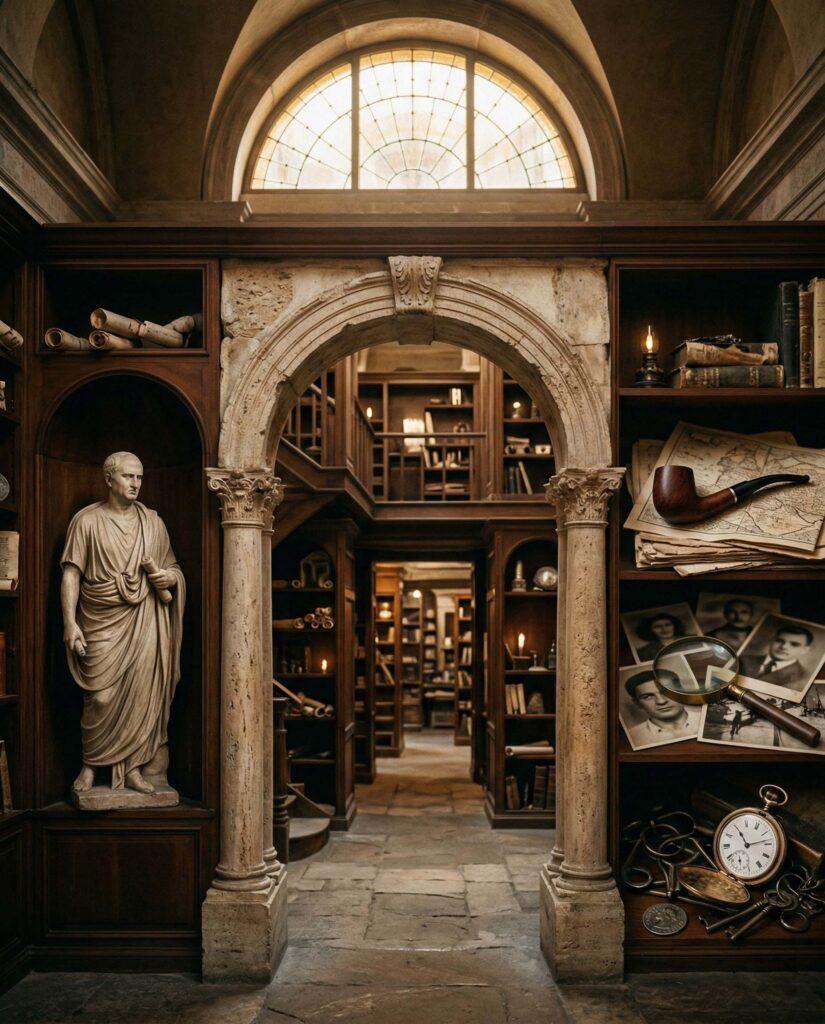
But we shouldn’t just look at fiction. History teaches us that this technique was the secret of the greatest orators of antiquity. Cicero, the most famous Roman lawyer and politician, could speak for hours before the Senate without consulting a single written note. His strategy was masterful: he divided the speech into parts, identified the central topic, and “deposited” it along a habitual route, such as the one from his home to the Roman Forum. For Cicero, the speech was a mental walk: traversing the path, he saw the images he had created and spoke extemporaneously, knowing with absolute certainty which topic would come next.

2. The Cognitive Bottleneck: Why the Palace is Necessary
You may have noticed that in treatises, technical manuals, or professional procedures, the elements to remember are often numerous. The problem is not the brain’s storage capacity (which is nearly unlimited), but its processing capacity.
Our brain is excellent at processing complex concepts, but it can only do so with a few pieces of information at a time. Without a structured method, notions remain “jumbled.” Imagine having thousands of important documents but no filing cabinet: even if you possess all the information, you would never be able to find a specific one when needed.
The Memory Palace solves exactly this: it provides the mental filing cabinet necessary to maintain order and sequence, eliminating the risk of forgetting crucial steps.


3. Operational Guide: How to Build Your Palace (Phase 1 – The Choice)
The first step in applying this technique is choosing the “container.” There are two main categories of Palaces: external routes and internal locations.
The Linear Path
It is fundamental that the path be linear. The places (loci) used must be consecutive. You cannot jump from one point to another randomly, or the order of information will be compromised.
- External Example: The route from home to the office. It is a path you take every day, where you effortlessly remember objects and landmarks.
- Internal Example: The route from your bedroom to the kitchen. Move mentally along the corridors, through the doors, following a logical sense (for example, always moving clockwise inside the rooms).
The Quality of Loci: Emotion and Vividness
Not all points on a path are good “loci.” You must choose noteworthy details, those that stimulate your senses. Imagine walking the road to the office:
- An effective locus might be the bakery on the corner, from which the smell of freshly baked bread makes your mouth water.
- Another powerful locus (by contrast) might be a dumpster that emits a horrible stench.
Why do these work better than an anonymous sidewalk or a random tree? Because they are emotional mental hooks. The scent and the stench activate areas of the brain linked to deep memory. If you choose insignificant details, your mind will have nothing to “grab onto” when searching for information.


4. La Preparazione del 4. Content Preparation (Phase 2 – The List)
Once the palace is chosen, you cannot simply start “throwing books” into it. You need a preparatory phase of analyzing the text or speech.
- Make the list: Take the topic you need to study and make a list of key points or “things to do.”
- Identify Keywords: For each point, isolate one or two keywords. Do not memorize the entire paragraph; memorize the concept that “unlocks” the understanding of the rest.
- Create the Image: Transform these keywords into concrete images using the PAV method (Paradox, Action, Vividness).
Only after completing these steps can you start “placing” the images into your loci.


5. Insertion and Association (Phase 3 – The Action)
Now let’s move to practice. Imagine you have to give a speech and have divided it into three parts. Your Palace is your home.
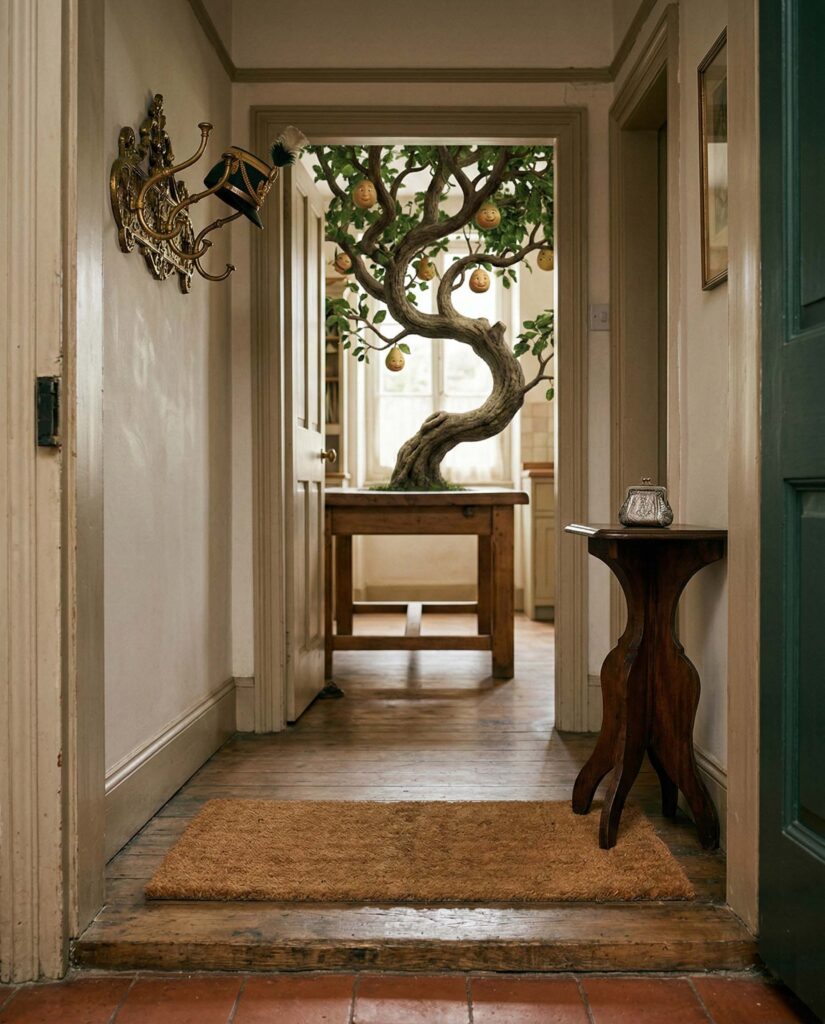
- Part 1 of the speech: You place it on the front doormat. If the topic is “rising costs,” you might imagine the doormat is made of burning gold coins scorching your feet.
- Part 2 of the speech: You enter the hallway and see a particularly beautiful column or a coat rack. If the topic is “the new strategy,” you might imagine an Army General (Image Agent) hanging from the coat rack, shouting orders to miniature soldiers.
- Part 3 of the speech: You proceed to the kitchen. If the topic is “employee well-being,” you might visualize a huge curved tree (like the one in Cicero’s example) growing in the middle of the kitchen table, with giant smiling fruits singing.
When the moment comes to speak, you won’t have to review the speech word for word. You simply close your eyes and “walk.” You see the doormat (costs), you see the general (strategy), you see the tree (well-being). The images give you the input, and you can speak naturally, knowing exactly where to look for the next piece of information.rai l’albero (benessere). Le immagini ti daranno l’input e tu potrai parlare con naturalezza, sapendo esattamente dove andare a cercare le informazioni successive.

6. Mistakes to Avoid When Structuring the Palace
Even the most powerful technique can fail if not applied rigorously. Here are the most common mistakes we see when training our students at Salyvan Academy:
- Loci too close together: If you put too much information in one square meter (e.g., too many images on the same desk), they will end up overlapping, creating confusion. Space out the loci so that each image has its own “living space.”
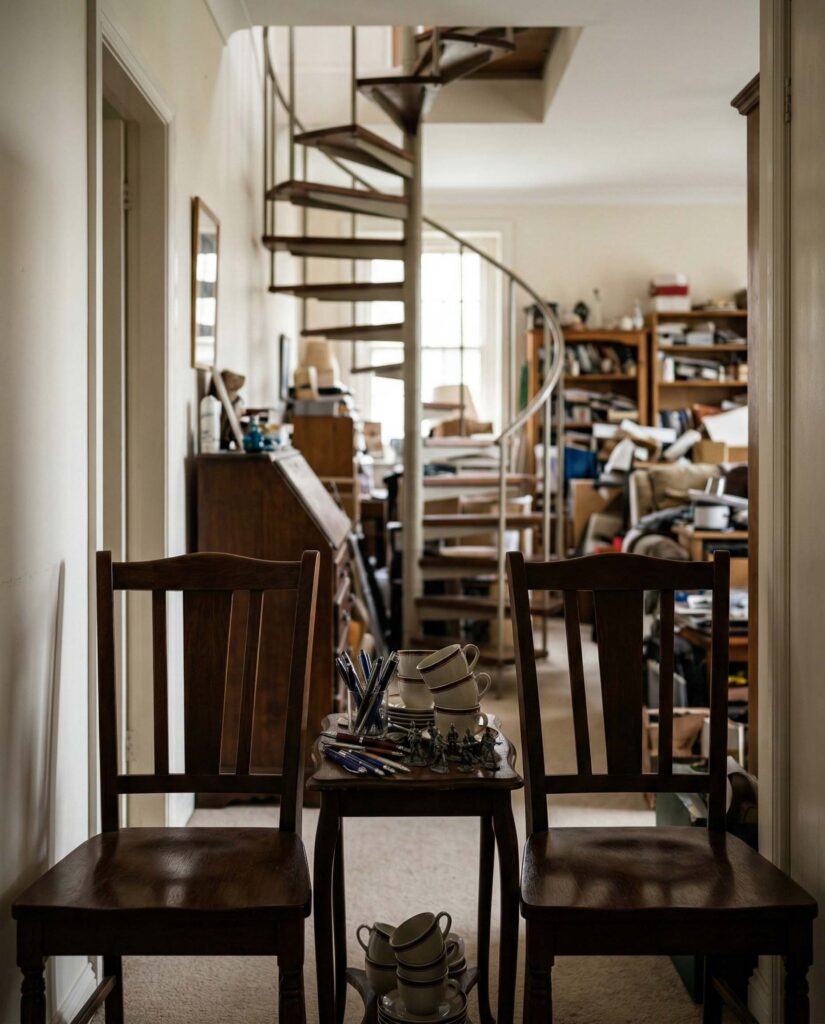
- Loci too similar: Avoid using ten identical chairs as consecutive loci. The brain would struggle to know if it is on chair #3 or #7. Look for unique details: the broken chair, the marble table, the green lamp.
- Lack of Linear Order: Do not jump from the kitchen to the attic and then back to the garage. Follow a path you could walk with your eyes closed in reality. Spatial order is your safety net.

7. The Memory Palace as a Lifestyle
Beyond university study or public speaking, this technique can be used for everyday life:
- To-Do Lists: Don’t write them on your phone; place them along the path you take to get coffee.
- People’s Names: If you meet many new people at an event, associate their name with a particular locus in the room you are in.
- Language Learning: Create a “Language Palace” where each room represents a grammatical category or a group of verbs.
Remember: the Memory Palace is not an innate gift; it is a skill acquired with consistency. At first, it might seem tiring to choose the loci, but with training, your brain will become incredibly fast at creating maps.gliere i loci, ma con l’allenamento il tuo cervello diventerà velocissimo nel creare mappe.


Conclusion: Toward Your Mind Architecture
In this ninth lesson, we transformed an ancient legend into a modern operational guide. We learned that:
- The Palace serves to order and sequence large amounts of information.
- It is the technique chosen by the greats of history (Cicero) and fiction (Sherlock Holmes).
- The key to success lies in the linearity of the path and the sensory vividness of the loci (the smell of bread, the stench of the dumpster).
- Preparation (list, keywords, images) is fundamental before placement.
Without this order, information would remain jumbled, making study frustrating and inefficient. With the Palace, however, you become the landlord of your knowledge.o ordine, le informazioni rimarrebbero alla rinfusa, rendendo lo studio frustrante e inefficiente. Con il Palazzo, invece, diventi il padrone di casa della tua conoscenza.
FAQ – Frequently Asked Questions about the Memory Palace
How much information can I put in a single locus? Ideally, a single keyword or a single complex concept transformed into an image. If you overload a single point, you risk forgetting the details. It is better to create more loci than to overload existing ones.
What happens if the path “ends”? You can simply “leave the house” and continue on the street, or link one palace to another. Many experts use “Russian doll palaces,” where a door in Palace A leads directly to the entrance of Palace B.
Can I use invented places or ones from video games? Absolutely. Video games (like Minecraft, Skyrim, or Call of Duty) are excellent palaces because the maps are designed to be memorable and are visually very rich. The only requirement is that you know the path by heart.
Did you enjoy this guide? Start mapping your house today and transform the way you study! Share your first 5 loci in the comments and tag Salyvan Academy to receive feedback from experts.
INFOGRAPHIC:

